Monday, May 6, 2013

ADD/ADHD Treatment with Medical Marijuana

Know what is ADD/ADHD?

Attention-Deficit/Hyperactivity Disorder (ADHD) is also known as Hyperactivity or Attention Deficit Disorder (ADD). ADHD is a common condition that affects both children and adults. The National Institute of Mental Health estimates that 3 to 5 percent of children have ADHD. Some experts think it is more common, occurring in 8 to 10 percent of school age children. There is disagreement over whether or not children grow out of the symptoms.
Children with ADHD normally have troubles paying consideration or concentrating. They can’t follow instructions and are simply fed up or annoyed with tasks that want focusing. They also are liable to move continually and are reckless, not stopping to think before they act. Although some might say that all children behave like this to some level, they happen more often than usual and are more severe in a child with ADHD.
The behaviors that are common with ADHD obstruct with a child’s capability to purpose at school and at home. Symptoms of ADHD in children are generally grouped into three categories: inattention, hyperactivity, and impulsiveness. Adults with ADHD may have difficulty with time management, organizational skills, goal setting, and employment. They may also have problems with relationships, confidence, and habits.
The accurate origin of ADHD is unknown but thought to be due to a number of factors: genetics, chemical imbalance, brain differences, head injury, exposure to toxins, and/or problems during the mother’s pregnancy.
Predictable treatment of ADHD has mostly been centered on treating the patients with stimulants like Concerta, Ritalin, and Dexedrine. The main problem with these medications is the side effects – abdominal pain, sleeplessness, poor appetite, and anxiety just to name a few. Some non- stimulant medication is available (like Strattera) and sometimes antidepressants are used as well. Interestingly, the long term effects of these treatments are still rather unknown. Other treatments include behavioral therapy, counseling, and dedicated educational assistance.
add-adhd

ADD/ADHD Treatment with Medical Marijuana

Many people well-known with ADD/ADHD have turned to medical marijuana (Cannabis, Weed, Pot) for their symptoms treatment with optimistic results and minimum side effects.
Most patients who choose medical marijuana over these medications do so because they are not happy with the bad side effects of stimulants. Other patients who do find these conventional treatments helpful will sometimes treat the unwanted side effects of the stimulants with marijuana; this blend therapy often relieves the side effects of insomnia and lack of appetite.
There is not enough technical proof to state that medical marijuana definitively helps with ADHD, however there are irresistible subjective and case reports to support at least a trial of medical marijuana for those adult patients who struggle with symptoms and the unwanted side effects of predictable treatments.
After passage of Proposition 215 in California, medical marijuana doctors begin seeing adult ADHD patients who reported that medical marijuana had positive effects on their ADHD symptoms with no unwanted side effects. Adult ADHD patients that use medical marijuana report that they feel peaceful are capable to focus on and complete a task that they normally could not do, are able to eat and sleep better, and overall have a better quality of life.
Studies in Hyperactive/Impulsive rats have shown that they improve with medial marijuana. It is time for the scientific research community to begin adult human studies on this most natural medication which progress ADHD symptoms without the unwanted side effects of refreshment medication.

Clips from the Global Marijuana March in Fort Worth on May 4, 2013

This was a Very Peaceful Event, I am glad to have been apart of this message to All!!

Sunday, May 5, 2013

2013 DFW Norml Global Marijuana March


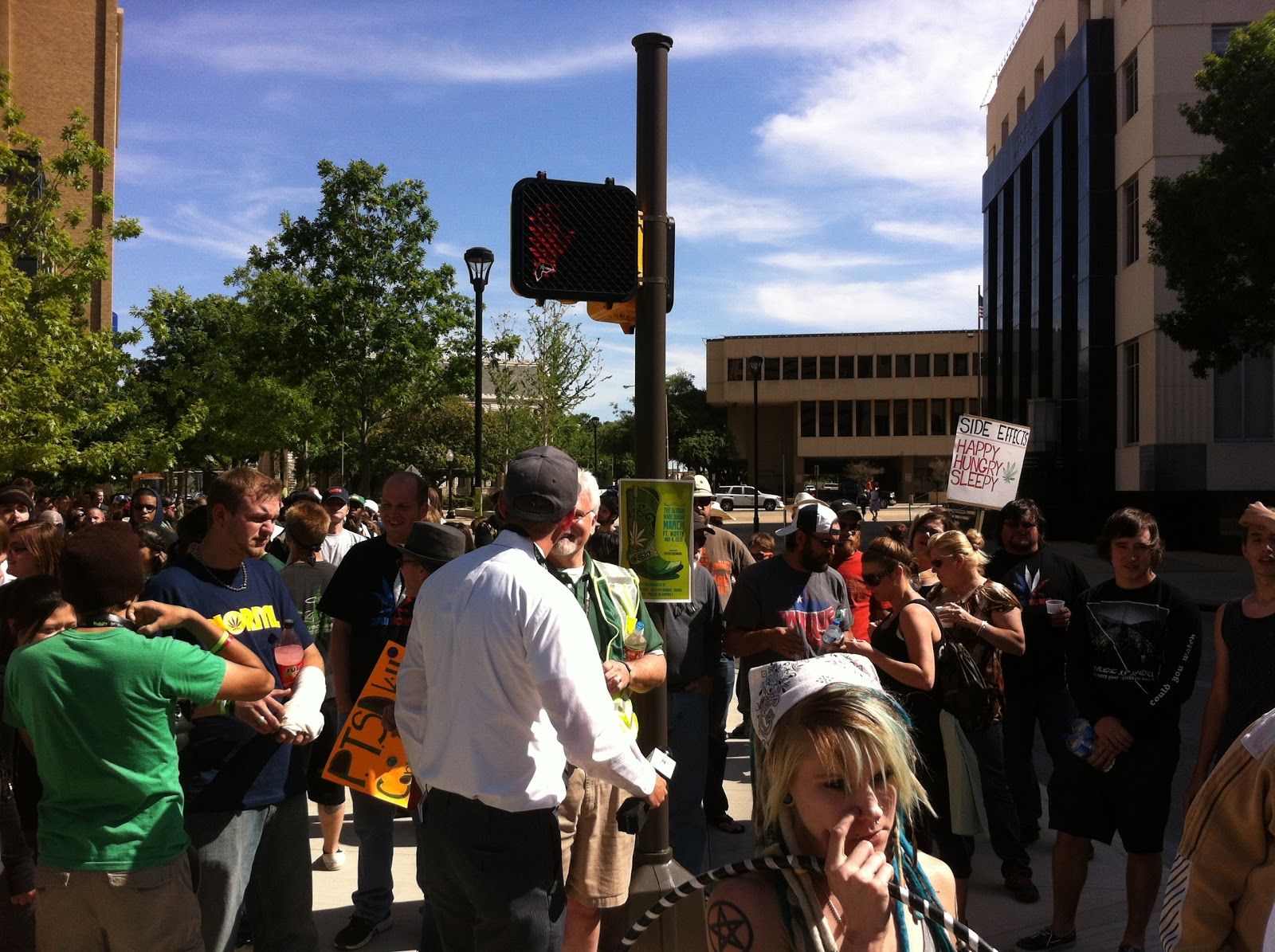
DFW Norml Hosted the 2013 Global Marijuana March on May 4, 2013.

DFW Norml is an non profit educational organization dedicated to legalizing marijuana in Texas, with Several hundred members on the Crusade to Fight for all patients.

The event had over 500+ members of all ages and sizes, some were dressed up in celebratory costume, as others were holding signs, "Cannabis Cures Cancer", "Mom's say Legalize" , and "Inform the Ignorant". Chant's were ringing, "FREE the WEED", Horns of supporters Blowing as cars drove by, people joined in off the street with the DFW Norml Global Marijuana March, as they headed to the Capitol in this massive march Informing locals of Cannabis and it's Medicinal Value.

This peaceful protest, was a success for all who participated. This Global Marijuana March stands up for patients all around the world and to inform others that Marijuana provides more than just a Stoner Personification, Marijuana Has been proven to Cure Cancers of all types, as well as aide in other healings.

I am a son, a brother, a father and a grandfather, I am a newly active member of DFW Norml, and could not be more proud of all the members whom were in attendance.

So, the next time you look at your son, brother, father or grandfather, daughter, sister, mom or grandmother, be proud that they stand up for your rights to use the medicine put on this planet.
Texas, We recognize that cannabis prohibition is bad for Texas, and we support the legalization of marijuana for medicinal purposes, responsible adult use, and the production of industrial hemp.

I am an author for a blog called,
http://hemphealthytoday.blogspot.com
I am an author for, Hemp Healthy Cooking: Hemp for Breakfast
                                 Hemp Healthy Cooking: Hemp for Lunch

Hemp Healthy Today,
Derek Cross

2013 DFW NORML GLOBAL MARIJUANA MARCH / FT. Worth Texas


               2013 DFW NORML Global Marijuana March

  This Peaceful event was held in Ft. Worth Texas, May 4, 2013, Where over 600+ attendees marched for the Medical Marijuana Cause, to show their support for this Plant in which  provides Medicine to several Patients, not only in Texas, but around the World.  Patients who suffer from all types of ailments, ranging from Cancer to a Migrane Headache, Chronic Pain, MS, Autism, Epilepsy, Fibromyalgia, Chrons Disease, Alzheimers, PTSD, ADHD, ADD... the list goes on.

   Many  Marches / People around the globe have been showing their support for this PLANT, and sharing its part of existence with Every one they meet, and the word is Growing as Fast as this plant Grows!

  We the Patients only ask for the same Rights as any other person taking any other kind of Medication.  Research has shown that there is Medicinal Value to Cannabis, it is NOW Time for the American Government to reclassify, and let the Doctors Help their patients as intended.

Thank you to the DFW Norml Team and Members for their hard work and Fight For The Cause, And to all the other Cannabis Crusaders and Cannabis Organizations out Fighting,  for the Rights of Patients.
                                                  
Here is to Opening Eyes for Cannabis and its Healing.  Peoples Pain needs to be Shown with Words and Ignorance has to be Fought with Love and Teaching.


Hemp Healthy Today,
Derek Cross

Friday, May 3, 2013

Industrial Hemp Back in Americas Soil Once Again, Thank You Hemp Cleans!

The Colorado industrial hemp regulations bill, SB13-241, has passed the House appropriations unanimously. On to the House floor and it should go to the Governors Desk!

So, as of today...
Senate Ag Committee: Passed Unanimously
Senate Appropriations Passed Unanimously
Senate Floor: Passed Uncontested
House Ag Committee: Passed Unanimously
House Appropriations: Passed Unanimously
House Floor: NEXT STEP

Thank you to HEMP CLEANS FOR MAKING THIS HAPPEN!!!!
 
Hemp Cleans And it passed on the House floor today. They brought the bill up on Special Orders.
 
Derek Cross Great work you have done for this country! Thank you!
 

Jason Lauve YEAH HOOO!!!!
 

Lannette J Johnson you, Jason. From reluctant activist to a true political mover 'n shaker. Keep up the good work, my friend!
 

Derek Cross Ten acre test crops? Or more?
 

Hemp Cleans R&D up to ten acres, commercial is open to the ag regulations next year and I have a feeling it will be unbounded, but need GeoFencing (GPS coordinates of the field). IT IS ALL GREAT!!
 

Derek Cross Will there be a limited amount of plots?
 

Hemp Cleans The original intent of the bill stayed intact and has always been a gift for our children's children. I thought about what I can do to benefit seven generations from now and beyond, here it is, industrial hemp to change the face of American farming and sustainability!

I LOVE YOU ALL FOR MAKING THIS HAPPEN!!! (even the nay sayers, you made me work harder.)
 

Will Maine Legalize Marijuana?

Today's poll: Legalized marijuana


Do you believe Maine should legalize, tax and regulate marijuana?
Yes
No                                                                            
View Results

Today's poll: Legalized marijuana

Do you believe Maine should legalize, tax and regulate marijuana?
Yes77%
No23%
Total Votes: 1877

click image to enlarge
With a lone protestor in background, Rep. Diane Russell holds a press conference in April 2011 at Portland City Hall to advocate legalizing and taxing marijuana. Russell is once again pushing for legalization, one week after voters in Colorado and Washington helped those states become the first to legalize recreational use of the

Thursday, May 2, 2013

Hemp= Bulletproof coat made from plant bedazzles state’s lawmakers, ARE YOUR EYES OPEN YET???

By Joe Hanel Herald staff writer
Industrial-HempDENVER – Voter approval of legalized marijuana last November caused a national celebration among pot aficionados, but it is also drawing an enthusiastic reaction from Colorado farm country.
That’s because Amendment 64 also legalized hemp, a crop that has many uses but won’t get people high if it’s grown properly.
“I’ve probably had more people stop me on the road in my area of the country asking me about hemp than anything in the last several years,” said Rocky Mountain Farmers Union President Kent Peppler.
Legislators on the House Agriculture Committee were just as interested Monday, and it’s little wonder why.
Hemp’s strong fibers can be used for clothing as simple as a T-shirt or complex as a fireproof suit, witnesses said. Businessmen told the committee that they have built houses out of it.
Adam Dunn, a marijuana entrepreneur who moved to Denver from Amsterdam, Netherlands, two years ago, dazzled legislators with his hemp jacket, which he said can stop a .357-caliber bullet. His company made its first bulletproof coat for the rapper Snoop Lion, formally Snoop Dogg, he said.
Rep. Don Coram, R-Montrose, sponsored Senate Bill 241, which sets up state regulation of hemp growers in the Colorado Department of Agriculture. It passed the House panel 11-0 Monday.
Coram said 75 people showed up to his town meeting at a Montrose John Deere dealership this year, wanting to hear more about hemp.
“We may be on the cutting edge of a great agricultural crop for rural Colorado,” Coram said. “I think it’s an opportunity for a new crop that has an old history.”
That history remains a problem today. Although the U.S. government encouraged farmers to grow hemp during World War II, it has been illegal for decades under federal law. Members of Congress are pushing a bill to remove hemp from the federal list of illegal drugs, Coram said.
Even though hemp is now legal in Colorado, farmers are hesitant to grow the crop because they don’t know if it will disqualify them for benefits from the federal farm bill, Peppler said.
However, legislators are anticipating that Congress might soon legalize hemp cultivation. If it does, then the bill would turn over hemp regulation to the U.S. Department of Agriculture and end the state program.
The legislative controversy over marijuana is nowhere to be found over hemp. The bill passed 34-1 in the Senate last week, and it has bipartisan backing in the House. Coram’s fellow sponsor is House Agriculture Committee Chairman Randy Fischer, D-Fort Collins.

Study: Marijuana Compound Appears To Weaken The HIV Virus

By Steve Elliott
Hemp News
The chief psychoactive compound in marijuana appears to be able to damage and weaken the most common strain of the HIV virus, according to a recent study.
Tetrahydrocannabinol, more common known as THC, is the main psychoactive ingredient in cannabis; it's the chemical that gets you high. A synthetic form of THC was used to attack the HIV-1 virus, which represents more than 90 percent of all HIV types, reports Ian Steadman at Wired UK.
HIV interactions with the CB2 cannabinoid receptor in white blood cells, specifically in macrophages, one of the many types of white blood cells. While lymphocytes -- the main white blood cells -- do the bulk of the infection-fighting work by tracking down and destroying germs, macrophages are sort of a backup part of the immune system. Macrophages are attracted to damaged cells, which they surround and engulf.
Unfortunately, macrophages are also one of the first types of cells infected by HIV when it invades the body. HIV can live inside macrophages for months, infecting other cells.
Investigators and researching how to stop the HIV virus from infecting macrophages; doing so could dramatically reduce the speed at which infection progresses, giving time for other antiretrovirals to help keep it at bay, or even eliminate it.
The CB2 receptor in macrophages is normally stimulated when THC enters the bloodstream -- and it appears that macrophages that have their CB2 receptor stimulated are stronger at fighting and weakening the HIV-1 virus.
A team from the Temple University School of Medicine learned this when they infected macrophages with HIV-1, then exposed the cells to one of three types of synthetic THC that specifically target the CB2 receptor. A clear decrease in the rate of HIV-1 infection was revealed when, after a week, these cells were compared against a control group which hadn't received THC.
Effectively, the macrophages -- with the aid of THC -- had become better and keeping the HIV-1 virus out.
"The synthetic compounds we used in our study may show promise in helping the body fight HIV-1 infection," said pathologist Yuri Persidsky of Temple University (Persidsky is one of the study's authors). "As compounds like these are improved further and made widely available, we will continue to explore their potential to fight other viral diseases that are notoriously difficult to treat."
Here's a slightly alternative scenario, Dr. Persidsky: How about using natural, safe, plant-based THC instead of the synthetic stuff? That way, it doesn't need "improving" and it's already "widely available."
But do you know why they won't use natural THC? Because it gets you high. To avoid this supposed "side effect" (which is, of course, part of the healing), medical researchers are willing to settle for less-effective, more-dangerous synthetics.
Targeting the CB2 receptor only stimulates the macrophages; the psychoactive effects of THC are centered on the CB1 receptor. Synthetic THC can be produced to only target the CB2 receptor, producing no high.
THC has also been shown in other studies to not suppress the immune system. This seems to indicate the possibility of a future drug that, in combination with other methods, could suppress the HIV-1 virus.
The study, "Attenuation of HIV-1 replication in macrophages by cannabinoid receptor 2 agonists," was published in The Journal of Leukocyte Biology.

Wednesday, May 1, 2013

A Link Between Autism and Cannabinoids

Mutations tied to autism in mice lead to deficits in the signaling pathway activated by marijuana.

By | April 11, 2013
A neuron affected by an NL3 mutation.NEURON, FOLDY ET AL.Two autism-related mutations in a synapse-adhesion protein lead to deficits in prolonged endocannabinoid signaling in mice. It’s a surprising connection that suggests such signaling problems could be implicated in autism spectrum disorders, according to a paper published today (April 11) in Neuron.
Tonic endocannabinoid signaling is long-lasting and contrasts with the brief pulses characteristic of phasic signaling. Endocannabinoid signaling in general affects memory formation, learning, pain, and other important processes, but the distinctions between tonic and phasic signaling have been poorly understood.
“It’s a very stimulating finding which could be a real turning point in understanding tonic endocannabinoids and how this otherwise mysterious lipid signaling really works,” said Bradley Alger, a neuroscientist at the University of Maryland School of Medicine who was not involved in the study. But he warned that the paper, while tantalizing, did not even definitively show that endocannabinoid signaling deficits could lead to autistic behaviors in mice, let alone in humans.
The researchers studied two mutations in neuroligin-3 (NL3), a gene encoding a protein involved in building and maintaining synapses. One mutation is a deletion of the entire gene, while the other, called R451, involves a single amino acid substitution. “These two mutations both have been associated with autism in humans,” said coauthor Thomas Südhof, a cellular physiologist at Stanford University.
Südhof and colleagues sought to understand what physiological effects the mutations had in common, assuming that if they could find a shared effect it might explain how they both led to autism. Using mice with each of the mutations, they made electrophysiological recordings of the interactions between pairs of cells in the hippocampal areas of the mouse brains. They compared recordings in the two types of mutant mouse brain cells to recordings done in normal mouse brains.
While synaptic changes often differed depending on the mutation, one type of cell containing cannabinoid type-1 (CB1) receptors showed similar alterations in its patterns of excitation for both types of mutant mice. Further investigation showed that tonic endocannabinoid signaling had been disrupted in these cells. “By this comparative physiology we were able to point out differences that pointed to this endocannabinoid signaling,” said Csaba Földy, also a cell physiologist at Stanford and an author of the paper.
The mechanism for how mutations in NL3 lead to endocannabinoid signaling deficits remains unclear. Could lacking properly functioning NL3 be interfering with endocannabinoid secretory machinery? Could it be somehow causing degradation of endocannabinoid signaling ligands? “We’re left without a really good idea of what it’s doing in single synapses or whether it’s effective behaviorally,” Alger said. Moreover, it is not yet clear how endocannabinoid signaling deficits would be involved in autistic symptoms, the authors said.
Alger added that, if the endocannabinoid system does turn out to be connected to autism in humans, medical marijuana could turn out to hold possibility for treating autism. But Südhof said that he did not know at this point whether marijuana would intensify or ameliorate autistic symptoms.
More immediately, said Alger, the findings will spur research into NL3 and other neuroligins, molecules he had never dreamed might have an effect on endocannabinoid signaling. “We’re really just starting to understand how this works,” he said. “In terms of autism, we’ll have to refer to future research.”
Földy et al., “Autism-associated neuroligin-3 mutations commonly disrupt tonic endocannabinoid signaling,” Neuron, doi:10.1016/j.neuron.2013.02.036, 2013

Daughter of anti-marijuana U.S. House Speaker marrying Jamaican Rastaman

By William Breathes
The daughter of anti-marijuana Republican U.S. House speaker John Boehner is marrying a ganja-toking Rastafarian from Jamaica. john boehner.jpg

According to the Jamaica Gleaner, Lindsay Boehner is engaged to Jamaican national Dominic Lakhan, who lives and works in Florida as a construction worker. Linsay Boehner and the dreadlocked Lakhan - who both reside in Florida - are set to marry this weekend, according to the New York Daily news.
Over the past few weeks, news sources uncovered that Lakhan, 35, has been arrested in the past for marijuana possession. In 2006, police say they found two grams of marijuana on Lakhan during a traffic stop that Lakhan admitted to being for personal use. Lakhan has declined to talk about his past arrests in recent weeks with the media (or anything for that matter).
Boehner hasn't commented on his future son-in-law's choices for Jah herb, and his office released a statement to CBS Miami saying they wouldn't be discussing it, ever: "The Speaker's daughters are not public figures. Accordingly, our office does not comment on their personal lives, even with respect to joyous family occasions such as their weddings."
In the past, Boehner has been staunchly opposed to marijuana reform, going so far as to say that there is no medicinal value to marijuana. He told a NORML supporter in 2011 that he is "unalterably opposed to the legalization of marijuana or any other FDA Schedule I drug. I remain concerned that legalization will result in increased abuse of all varieties of drugs, including alcohol." It's a preeeeety hypocritical approach considering the man admits to smoking cigarettes and drinks booze on the reg.
In the spirit of One Love, we're optimistic and hope that John Boehner is happy that his daughter found the love of her life and learns to accept other people's recreational choices.
And hey, maybe Lakhan can help change the tune John Boehner has been singing (to some thing decidedly more reggae, for that matter). Personally, we're all for Lakhan bringing some much needed irie vibes to the powerful family. Here's our prediction for John Boehner by 4/20 of next year:

Saturday, April 27, 2013

Can Dietary Hemp Help With Inflammation and Cancer?

Becca Wolford, Contributing Writer
Waking Times
Cancer. It’s one word that no one wants to hear in their diagnosis. It is certain that most of us in one way or another have been touched by cancer or know someone who has. However, cancer is no longer a guaranteed early death sentence.
Cancer research has come a long way. There are medicines that help treat cancer or kill it. An IMPORTANT factor in cancer recovery is nutrition. And what better way to beat cancer than with the world’s most perfect, healthy plant?
Cancer can be caused my numerous factors. Some say there is a genetic link – that some cancers run through family generations. Poor diet, smoking, injury, illness, environmental toxins, inflammation – these can all have a hand in the appearance of cancer.
Studies have shown that inflammation is the cause of many diseases and illnesses, including cancer.
“This study by researchers at the Ohio State University Comprehensive Cancer Center — Arthur G. James Cancer Hospital and Richard J. Solove Research Institute (OSUCCC — James) found that inflammation stimulates a rise in levels of a molecule called microRNA-155 (miR-155).
This, in turn, causes a drop in levels of proteins involved in DNA repair, resulting in a higher rate of spontaneous gene mutations, which can lead to cancer.” (www.sciencedaily.com)
“Chronic inflammation is a major cause of cancer in the world because it releases powerful oxidants which both stimulate cell division and are mutagens.” (users.rcn.com)
What is inflammation?
“Inflammation is part of the complex biological response of vascular tissues to harmful stimuli, such as pathogens, damaged cells, or irritants. Inflammation is a protective attempt by the organism to remove the injurious stimuli and to initiate the healing process. Inflammation is not a synonym for infection, even in cases where inflammation is caused by infection. Although infection is caused by a microorganism, inflammation is one of the responses of the organism to the pathogen.” (Wikipedia)
Below are some causes of inflammation:
Immune reactions
Infection
Physical injury
Toxins
Trauma
Irritants (chemical, abrasive, etc.)
Burns/cuts/scrapes
Bacteria
Anxiety/depression
Poor diet
All of the above conditions can affect the immune system, and when the immune system kicks in this is what can happen:
“Pro-inflammatory cytokines are part of our immune systems that attack and kill cells with oxidative chemicals. If they don’t stop their attacks, they will start killing cells our bodies need. Unchecked inflammation is now thought to be responsible for cardiovascular disease and cancers.” (http://www.mnwelldir.org)
It is also believed that chronic inflammation is the result of low oxygen in the cells.
So, you may be asking, where does hemp come into play in all this?
If you recall, above I mentioned that poor nutrition can be a factor in inflammation. If the cells are not getting the nutrients they need they become unhealthy.
For example, hemp has the perfect ratio of Omega fatty acids. Fatty acids work to keep the cells healthy and strong, and keep the membranes supple for nutrients to easily pass in. Omega fatty acids are also the components in hemp that have anti-inflammatory properties.
Hemp has edestin protein, the protein closest to human globulin (and it is easily digested by the body). Edestin protein boosts the immune system by building what are called immunoglobulins, edestin works to repair cells, and also maintains cell DNA.
 

When the DNA in cells is damaged, that can cause cancer. When those damaged cells multiply, they cause cancer to grow.
Hemp is a complete protein and is one of the most nutrient dense plant sources on the earth. Because it is so nutrient dense, it makes it a perfect addition to the diet to improve and sustain health. It has been shown that in some instances poor nutrition have a hand in the occurrence of disease; proper nutrition with plenty of Omega fatty acids, protein, fiber, and micronutrients found in hemp can be the turning point to good health (along with wise diet choices, exercise, and removing as many toxins as possible).
It is a known fact that a nutrient-rich diet can treat or reverse disease. Can hemp cure cancer? Some say yes.
Does a diet rich in hemp help strengthen the body and immune system? That is a definite yes.
About the Author
Becca Wolford is a writer, entrepreneur, artist, reiki practitioner, and hemp activist. She has experienced first-hand the nutritional and healing benefits of hemp and her passion is learning, writing, and educating others about the benefits of hemp – benefits that encompass nutritional health for humans, a healthy environment, and a healthier economy. Becca also distributes Versativa, an amazing raw, clean, hemp-based nutritional supplement and Restoration90, a raw, clean, nutritional product with marine phytoplankton, hemp, and essential nutrients for optimum health. Please support her at her excellent blog Hemphealer.com.
This article is offered under Creative Commons license. It’s okay to republish it anywhere as long as attribution bio is included and all links remain intact

Friday, April 26, 2013

Medical Marijuana For Autism?

By on April 23, 2013

TruthOnPot.com – Autism can be a major source of stress and self-doubt for parents of diagnosed children. It’s all-too-common for parents to wonder whether there was something that could’ve been done to prevent their child from getting the disorder.
But while the overall occurrence of autism seems to be trending upward, the truth is that scientists are not any closer to identifying a cause, not to mention a cure.
So for parents struggling to find an effective treatment for their child’s condition, recent research on medical marijuana may be welcomed news.

What is Autism?

Symptoms appear in a child’s first 3 years. Image source

Autism (also known as Autism Spectrum Disorder) is a mental condition that starts to take effect within the first three years of a person’s life. Symptoms of autism are most pronounced during childhood and are estimated to affect 2% of U.S children.

Autism interferes with normal brain function and is characterized by 3 core symptoms: impaired communication, impaired social interaction and repetitive patterns of behaviours and interests. And although researchers have yet to identify the exact source of autism, a disorder known as Fragile X Syndrome remains the most commonly known genetic cause.
Autism occurs on a broad spectrum, meaning that each individual’s case is unique. Still, a number of pharmaceuticals are commonly prescribed to help patients manage their symptoms, ranging from stimulants to antipsychotics. Unfortunately, many of these drugs come with serious side effects, including the risk of heart problems and weight gain.
Parents have expressed serious concern over the risks associated with the use of pharmaceuticals, not to mention the significant portion of patients who respond poorly to these medicines. As a result, some are beginning to see medical cannabis as a safer and more effective alternative.

How Can Marijuana Help?

The endocannabinoid system – the body’s natural cannabinoid system – is known to play a therapeutic role in a wide range of disorders. Recent evidence suggests that it may play a role in the treatment of autism as well.
Given that autism is strongly linked to genetics, researchers at the University of California set out to investigate the role of cannabinoids in Fragile X Syndrome. Published in 2012, the study showed that levels of 2-AG (2-arachidonoylglycerol) – a natural cannabinoid that binds to CB1 receptors – were depressed in animals with the disorder. Furthermore, by increasing levels of 2-AG, the researchers were able to reduce some of the symptoms of autism, including behavioural defects.
Interestingly, a more recent study seemed to identify a link between the endocannabinoid system and immune cells sampled from children with autism. Immune dysfunction is believed to be another factor that contributes to the disorder, and, according to this study, may be linked to higher levels of CB2 receptors expressed by cells. While CB1 receptors were not found to be overexpressed, CB2 receptors play a much larger role in immune regulation. Based on these findings, the authors of the study concluded that CB2 receptors could be a therapeutic target for the management of autism.
Finally, various cannabinoid studies have provided strong evidence of marijuana’s medical benefits, which also prove to be exceptionally versatile. Autism may be just one of the many disorders for which medical cannabis can be used for, as summarized by Lebanese psychiatrist Dr. Rami Bou Khalil in a letter to the editor of the Journal of European Child and Adolescent Psychiatry (2012).
“CBD and THC may help in improving symptoms of Autism Spectrum Disorder by their sedative, antipsychotic, anticonvulsant and tranquilising effects.” – Dr. Rami Bou Khalil

What Doctors Are Saying

Evidence of medical marijuana’s usefulness in the treatment of autism comes mostly from anecdotal evidence. Indeed, while scientific research has yet to advance to the clinical stage, doctors and patients alike have already indicated their support.
Dr. Bernard Rimland, the late founder of the Autism Research Institute, was one of the first health professionals to write on this topic. In comparing the overall safety of marijuana to more common medications like Risperdal, Dr. Rimland asserts that marijuana is a much safer substance.
“…if one is going to need to use drugs, one ought to consider a relatively safe drug, like marijuana, if research bears out the good results that a number of parents have reported.” – Dr. Bernard Rimland
And despite the preliminary nature of current research, good results seem to have already been bore, although more studies need to be conducted before anyone can be certain.
Yet for some patients, more conclusive evidence doesn’t appear to be necessary. According to Dr. Jean Talleyrand, founder of the Oakland medical marijuana dispensary Medicann, 4 out of some 150,000 of his patients have sought cannabis for the treatment of autism.
“All four patients have had very good results.” – Dr. Jean Talleyrand